

 (195KB/2 pages)
Tokyo Portcity Takeshiba Office Tower
Sustainability
Environmental Initiatives
Environment Management
Environmental Policy
The SoftBank Group's “Environmental Policy” sets out the principles to take the global environment into consideration when conducting corporate activities. This policy was decided by a resolution of SoftBank Group Corp.'s Board of Directors and it requires all directors, officers and employees of the SoftBank Group to be aware of the need to reduce the burden on the global environment in all business activities, to conserve resources and energy, to improve energy efficiency and make effective use of resources in order to achieve harmony between mankind and nature, and to maintain biodiversity and contribute to the continuous improvement of the global environment. We will communicate with SoftBank Group stakeholders to promote business activities in consideration of the global environment.
Approach to environmental issues
SoftBank Group monitors its environmental performance, including data on greenhouse gas emissions and energy consumption in the course of its business operations, and discloses the results annually. In cooperation with our stakeholders, we are promoting initiatives contributing to solve environmental issues, such as addressing climate change and enhancing energy efficiency.
Furthermore, major operational bases of SoftBank Corp. have established and operated an environmental management system (EMS) under the International Organization for Standardization’s ISO14001 Standards. SoftBank Corp. performs the PDCA (plan, do, check, act) cycle on a timely basis in our environmental management system and continuously makes improvements based on the level of impact that its business activities have on the environment. The company has strived to comply with environmental laws and regulations. There were no violations of environmental laws and regulations in fiscal 2024.
Enhanced environmental awareness
SoftBank Group established the “SoftBank Group Code of Conduct,” which specifies that we are committed to:
· Introduce innovative solutions that provide a positive environmental and social impact.
· Lead globally and act locally to reduce and improve our impact on the environment.
· Conduct our business activities with consideration for the global environment and the effective utilization of limited natural resources.
SoftBank Group has thoroughly disseminated the Code of Conduct to all Group employees. Specifically, we require employees to consider the environment in our everyday work, including control and reduction of the emission of greenhouse gases and handling of industrial waste. SoftBank Group also regularly provides training sessions to promote the understanding of the Code of Conduct.
For example, SoftBank Corp. provides environmental education for its employees via e-learning to help them acquire basic knowledge of and raise awareness about environmental concerns. These courses cover key topics such as energy consumption reduction, waste reduction, and water efficiency. Through this learning system, employees gain a comprehensive understanding of the company’s environmental management initiatives and enhance their individual awareness and understanding of specific environmental challenges. Those e-learning courses are accessible on iPhones and iPads, enabling effective time management. In fiscal 2024, the participation rate for environmental education among employees was 71.4%. In the contribution assessment, which evaluates employees’ performance and contributions to the organization, factors such as “contribution to overall CO₂ reduction in society,” a KPI related to climate change materiality, are taken into consideration in determining employee bonuses.
Environmentally-friendly supply chain
In order to promote environmentally-friendly business activities, the SoftBank Group has formulated ethical standards for the environment in its “Supplier Code of Conduct,” and requires suppliers to work in accordance with the ethical standards set forth in the Code. The SoftBank Group will proactively undertake relevant environmentally-friendly corporate activities through partnerships with our stakeholders.
Efforts to Address Climate Change
Our stance on climate change
Natural disasters caused by climate change are becoming more severe every year and urgent action on climate change mitigation and adaptation is required. The SoftBank Group recognizes the importance of addressing climate change and is making group-wide efforts to provide the society with new and innovative technologies that contribute to solving climate change.
Climate-related Information Disclosures in accordance with the TCFD Recommendations
SoftBank Group Corp. disclosed its climate-related governance, risk management, strategy, metrics and targets in accordance with the recommendations of the Task Force on Climate-related Financial Disclosures (TCFD).
For our major subsidiaries’ climate-related information disclosures in accordance with the TCFD recommendations and similar regulations, please refer to the websites of each company.
Arm has provided climate disclosures in its annual report adhering to the UK Climate-related Financial Disclose regulation (CFD) under the UK Companies Act*.
The regulations require companies to report on their governance, strategy, and risk management responses to climate change, as well as the metrics and targets they use to monitor climate-related impacts on the business. CFD also requires companies to assess the impact of climate risks and opportunities over different time horizons and to assess the resilience of the company
Commitment to achieve Carbon Neutrality by fiscal 2030
The SoftBank Group is making efforts to reduce greenhouse gas emissions from business activities. The majority of the SoftBank Group’s greenhouse gas emissions come from the use of electricity. Therefore, as a step forward to achieve Carbon Neutrality, the SoftBank Group mainly focuses on a shift to electricity generated from renewable energy sources. Meanwhile, electricity and energy-saving measures utilizing IoT are also implemented at the head office building and data centers.
Group target
SoftBank Group Corp. set a group target*1 as below in June 2022 and aims to reduce greenhouse gas emissions from business activities of the SoftBank Group to net zero by fiscal 2030.
| Group target*1 | Achieve Carbon Neutrality by fiscal 2030 |
|---|
Greenhouse gas emission reduction plan to achieve the Group target
In March 2024, SoftBank Group Corp. formulated and disclosed a plan for reducing greenhouse gas emissions to achieve the Group target, which is reviewed when required. SoftBank Group Corp. and its major subsidiaries are undertaking greenhouse gas emissions reduction initiatives in accordance with this plan.
As of August 2025
| Result | Plan | Boundary | ||||||
|---|---|---|---|---|---|---|---|---|
| FY22 (Base year) | FY25 | FY26 | FY27 | FY28 | FY29 | FY30 | ||
| Scope1&2 (t-CO₂) | 591,508*2 | 397,444 | 387,246 | 376,204 | 365,161 | 354,119 | 0 | SBG+Major subsidiaries*1 |
To achieve the Group target
SoftBank Group Corp. has achieved Carbon Neutrality*3 since fiscal 2020. In addition, major subsidiaries have also set their own targets regarding greenhouse gas emission reduction, undertaking various initiatives to achieve the targets.
Targets and achievements at SoftBank Group Corp. and its major subsidiaries
| Targets | Achievements | |
|---|---|---|
| SoftBank Group Corp. | Achieved Carbon Neutrality in fiscal 2020 (and continues to be carbon neutral today)*3 | |
| SoftBank Corp. | ・Carbon Neutrality in its group by fiscal 2030*3 ・Net Zero in its group by fiscal 2050*4 | Scope 1 and 2: emissions reduction progressed in line with the SBTi standard ・Alignment with IPCC 1.5℃ pathway ・Ratio of renewable energy: 61.8%*5 Scope 3: emissions increased due to the expanded calculation boundary and business growth (both in fiscal 2024)*4 |
| LY Corporation | ・Net-zero greenhouse gas emissions in LY Corporation by fiscal 2025*3 ・Net-zero greenhouse gas emissions in its group by fiscal 2030*3 | Converted 87.4% of energy used by its group to renewable energy (fiscal 2024) |
| Arm | ・Convert 100% of electricity used by its group to renewable energy by 2023 ・Committed to cutting its absolute GHG emissions by 50% from an FYE2020 baseline across all emissions sources (Scope 1, 2, and the six categories of Scope 3 relevant to Arm) by FYE2030 in line with a 1.5°C climate pathway and the Paris Agreement | Sourced 100% renewable electricity for its group’s electricity used in business activities (Since fiscal 2022) |
SoftBank’s Net Zero(SoftBank Corp.)
Realizing a Low-Carbon Society(LY Corporation)
Sustainability (Arm)
Realizing a Low-Carbon Society(LY Corporation)
Sustainability (Arm)
Applies to greenhouse gas emissions (Scope 1 and 2) from the business activities of SoftBank Group Corp. and its major subsidiaries (in principle, “Principal Subsidiaries” in the Annual Securities Report)
The results for the base year (FY2022) have been recalculated based on the boundary reflecting changes in major subsidiaries. For the past results and their boundaries, please refer to the "ESG data”.
Applies to greenhouse gas emissions (Scope 1 and 2)
Applies to greenhouse gas emissions (Scope 1, 2, and 3)
Boundary is SoftBank Corp. and its main subsidiaries
Efficient use of energy and increased reliance on renewable energy
Recognizing the importance of efficient and sustainable use of energy and resources, the SoftBank Group is working to reduce the use of energy and resources and actively introduce renewable energy.
Switching to renewable energy sources in company headquarters (SoftBank Group Corp. and SoftBank Corp.)
The SoftBank Group has set a target for SoftBank Group Corp. and major subsidiaries to achieve carbon neutrality in Scope 1 and 2 by FY2030. As part of this initiative, since September 2022, SoftBank Group Corp. and SoftBank Corp. have switched to using renewable energy* at the company headquarters, “Tokyo Portcity Takeshiba Office Tower,” where they are located.
In addition, the building is equipped with energy-saving technologies, such as LED lighting that uses motion sensors to automatically adjust brightness, and blinds that open and close automatically to optimize air conditioning, in an effort to ensure the efficient use of energy.
Includes the use of non-fossil fuel certificates

Using renewable energy for base station power consumption (SoftBank Corp.)
SoftBank Corp. is promoting the conversion of base station power consumption to renewable energy to achieve its commitment to reducing its greenhouse gas emissions to net zero by 2030. SoftBank Corp. purchases electricity from renewable energy* from SB Power Corp., a subsidiary of the company that operates an electricity retail business. At the end of fiscal 2024, more than 92.6% of the electricity used at base stations has already been provided by renewable energy*.
Includes the use of non-fossil fuel certificates
100% renewable energy–powered* green data center (SoftBank Corp.)
SoftBank Corp. is building a decentralized network of AI data centers across Japan and plans to utilize renewable energy sources* in these centers. The Hokkaido Tomakomai AI Data Center, scheduled to open in fiscal 2026, is designed to operate entirely on renewable energy supplied by SB Power and Hokkaido Electric Power. It seeks to become a green data center through the active use of locally generated renewable energy, aiming to reduce environmental impact and promote harmony with the surrounding community.
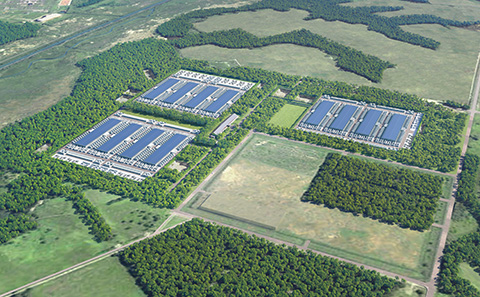
Image of how the Hokkaido Tomakomai AI Data Center will look when completed
Includes the use of non-fossil fuel certificates
Data Center energy efficiency and conversion to renewable energy (LY Corporation)
In addition to improving energy efficiency, LY Corporation is promoting the use of renewable energy in its data centers, which account for the majority of the company's energy consumption. At the Shirakawa Data Center and the Kitakyushu Data Center, renewable energy use began in 2021, and the company now uses 100% effectively renewable energy, in compliance with RE100* standards.
An international initiative that aims for companies to source 100% of the electricity used in their business operations from renewable energy.
Developing technologies and providing services to contribute to the mitigation of climate change
Reducing environmental impact through the development of next-generation batteries (SoftBank Corp.)
With the evolution of devices, electricity consumption has increased, leading to higher greenhouse gas emissions, which have become a growing concern. To mitigate this environmental impact, SoftBank Corp. is engaged in research and development aimed at the creation and practical application of next-generation batteries. By increasing the capacity and energy density of batteries used in devices, the company seeks to enhance the performance and efficiency of various devices and equipment, thereby reducing their environmental footprint.
As part of these initiatives, the company established the SoftBank Next-Generation Battery Lab in June 2021. At this lab, a wide range of next-generation batteries from around the world are being evaluated and tested. In October 2021, SoftBank, in collaboration with U.S.-based Enpower Greentech Inc., successfully demonstrated a lightweight, high-capacity lithium metal battery with a gravimetric energy density more than twice that of conventional batteries (approximately 520 Wh/kg). Going forward, the company aims to position the lab as a platform to accelerate the development and early commercialization of next-generation batteries through continued research and innovation.
Developing energy-efficient technology
Semiconductor architecture that improves energy efficiency (Arm)
As compute demands continue to grow to handle increasingly complex workloads, Arm’s solutions prioritize power efficiency while providing market-leading performance.
Hyperscalers like Amazon Web Services (AWS), Google Cloud, and Microsoft Azure have adopted the Arm compute platform to build their own general-purpose custom silicon to transform energy usage in the data center and cloud, reporting better efficiency compared to previous-generation chips.
For example, Google Cloud introduced custom Google Axion Processors, based on Arm Neoverse V2, for general-purpose compute and AI inference workloads. Axion powers instances that deliver up to 60% better energy efficiency than comparable current-generation x86-based instances.
Promoting decarbonization through initiatives
Establishment and operation of Renewable Energy Council and GDC Renewable Energy Council (SoftBank Group Corp.)
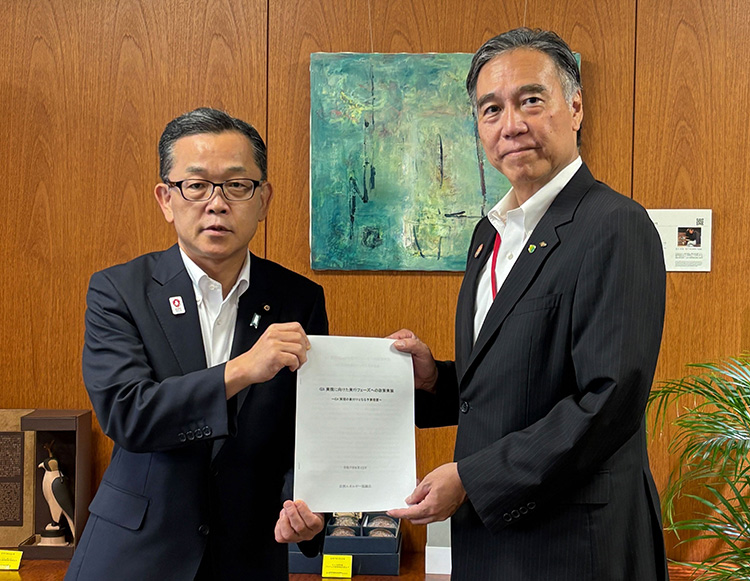
On August 12, 2025, Mr. Shuichi Abe, Chairperson of the Renewable Energy Council, submitted a policy proposal to Mr. Shinji Takeuchi, then Parliamentary Vice-Minister of Economy, Trade and Industry.
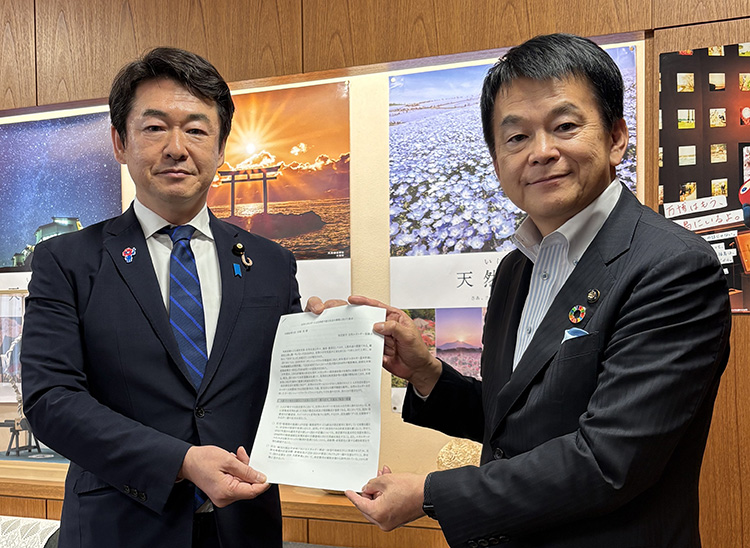
On July 7, 2025, Mr. Hayato Shimizu, Chairperson of the GDC Renewable Energy Council, submitted a policy proposal to Mr. Akiyoshi Kato, then Parliamentary Vice-Minister of Economy, Trade and Industry.
In response to the energy crisis caused by the Great East Japan Earthquake on March 11, 2011, SoftBank Group Corp. established the “Renewable Energy Council” in July 2011 in collaboration with prefectures and, together with government-designated cities, also established the “GDC Renewable Energy Council".Both councils aim to promote and expand the use of renewable energy as a reliable, safe, and sustainable new energy source. Since then, SBG has been involved in the operation of both councils as the secretariat. Both councils are working actively towards their objectives: “1. Promotion and expansion of renewable energy through policy proposals” and “2. Sharing and exchanging information related to renewable energy promotion and expansion”.
The first objective, “Promotion and expansion of renewable energy through policy proposals,” involves making policy proposals to the government that contribute to the promotion and expansion of renewable energy. These include setting renewable energy targets as well as developing and revising energy related systems and regulations based on local circumstances. The policy proposal drafts, compiled as a consensus of participating municipalities, are resolved by the chief leaders at the general meetings and submitted directly to the government by the governor or mayor who is the chairperson of either council.
For instance, both councils have appealed for “Renewable Energy as a Major Power Source”, as well as “Ambitious Renewable Energy Targets”in their policy proposals for several years. In the Japan’s 7th Strategic Energy Plan revised in February 2025, renewable energy continues to be positioned as a major power source. Also, in the Outlook for Energy Supply and Demand in FY2040, it is shown that renewable energy is expected to account for 40-50% share in the energy mix in fiscal 2040. For the first time, the plan sets a policy to make renewable energy the largest power source. In order to realize these goals, the councils approved practical recommendations, including coexistence between renewable energy and local communities, promotion of regional decarbonization and promotion of perovskite solar cell deployment, at the general meetings held in the summer of 2025 and submitted them to the government.
Furthermore, for the second objective “Sharing and exchanging information related to renewable energy promotion and expansion,” the two councils hold events for the municipality members and corporate members, including seminars by government policy makers and leading experts active in national advisory councils, as well as workshops and discussion sessions among the members to share good practices and issues regarding renewable energy, and site visit to power generation facilities. The councils also compile information on renewable energy related projects in municipalities across Japan and case studies of obstacles to the spread of renewable energy. Through these activities, both Councils offer meaningful opportunities for municipalities and the private sector to further share and exchange information, contributing to their efforts towards decarbonization.
As the secretariat, SoftBank Group Corp. will continue to play an important role in facilitating not only between municipalities, but also between the government and municipalities, as well as between municipalities and corporate members, and will contribute to achieving net zero by 2050 through the promotion and expansion of renewable energy.
Participation in Japan Climate Initiative (SoftBank Group Corp.)
SoftBank Group Corp. is the inaugural member of the Japan Climate Initiative, a network created in 2018 to strengthen the dissemination of information and the exchange of opinions and views by companies, local authorities and NGOs that proactively tackle climate changes.
The Japan Climate Initiative (JCI) is a network of non-state actors with the mission of "joining the front line of the global push for decarbonization from Japan." The organization was formed in 2018 with CDP Japan, WWF Japan and the Renewable Energy Institute, which SoftBank Group Corp. CEO Masayoshi Son founded in 2011, serving as the secretariat.
JCI’s mission aligns with the SoftBank Group’s proactive response to the impacts of climate change and associated risks and opportunities. We recognize climate change as a key management issue and are taking bold steps to tackle it. JCI is a committed advocate of climate action.
Since its founding, the organization has hosted the Japan Climate Action Summit every year and has published public statements such as “Calling for an Ambitious 2030 Target for Japan to Realize the Paris Agreement Goal”. By endorsing these statements alongside other JCI members (a total of nine times to date), the SoftBank Group has stressed the urgency of climate action. Our participation in JCI seminars and other events and conversations with JCI members are also helping to accelerate the decarbonization of our own investment and business portfolios.
Participation in the One Planet Sovereign Wealth Fund (OPSWF) Network (SoftBank Group Corp., SBIA)
SoftBank Group Corp. and SBIA participate in the One Planet Sovereign Wealth Fund (OPSWF) Network, which was established as a Working Group in July 2018. That same year, the OPSWF’s founding members developed the OPSWF Framework to advance the integration of climate change risks and opportunities into large and diversified asset pools. The Abu Dhabi Investment Authority, the Kuwait Investment Authority, the New Zealand Superannuation Fund, the Public Investment Fund and the Qatar Investment Authority currently lead the OPSWF’s Steering Group. In July 2019, the One Planet Asset Manager (OPAM) Initiative was launched to allow asset managers to support the OPSWF Framework. Similarly, in July 2020, the One Planet Private Equity Funds (OPPEF) Initiative was founded by Ardian, The Carlyle Group, Global Infrastructure Partners, Macquarie Asset Management, and SBIA. SBIA and the OPPEF Group, now comprising 14 members, actively engage in the OPSWF's programs and discussions, including the Network’s Annual CEO Summits and its Peer Exchanges. As of March 2025, the OPSWF Network is comprised of 50 members representing more than $46 trillion in assets under management and ownership.
Spread of Renewable Energy
U.S. Solar Power Project (SBE Global)
To promote renewable energy, SBE Global and its subsidiaries operate a power generation business that boasts one of the largest solar power businesses in the U.S. The business has nine solar farms, which collectively generate 2,130 MW.*
SBE Global is currently constructing four additional solar farms in the U.S., which will collectively generate 1,180 MW of solar and 1,361 MW of battery storage.*
Generation capacity in AC, as of March 31, 2025

Expansion of renewable energy through portfolio companies
Investment in the clean energy transition across Africa,
the Middle East, and Asia(AMEA Power)
AMEA Power is an SBG portfolio company that is actively contributing to decarbonization and the realization of a sustainable society across Africa, the Middle East, and Asia through the development and operation of clean energy projects.
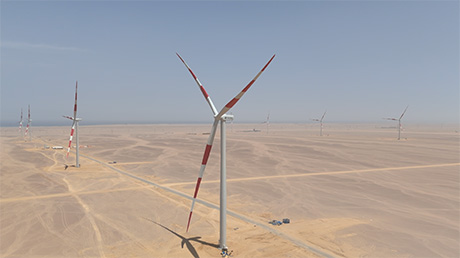
In December 2024, the company commenced commercial operations of a 500-MW solar power plant in Egypt. This plant is among the largest of its kind on the African continent and significantly contributes to Egypt’s decarbonization goals. In addition to its environmental benefits, the project has created thousands of jobs through its construction and operation, thereby stimulating the local economy. Furthermore, AMEA Power completed the construction of a 500-MW wind power project in June 2025. The company is also deploying large-scale battery energy storage systems in Egypt, aiming for further expansion in the region.
With more than 6 GW in the project pipeline, and more than 2.6 GW of operating and under or near construction capacity across more than 20 countries,* AMEA Power is one of the fastest-growing clean energy companies in the region. In addition to increasing renewable energy such as solar and wind power, the company is actively promoting the adoption of utility-scale battery storage and exploring opportunities in green hydrogen, playing a vital role in accelerating the transition to clean energy.
As of April, 2025
Conservation of Natural Capital
Promotion of Circular Economy
In order to make efficient and effective use of limited resources, the SoftBank Group strives to reduce the environmental impact of its business activities by conserving resources, reducing the generation of waste, and promoting the reuse and recycling of products and other materials. We also contribute to the realization of a circular economy through our reuse business.
Promotion of “3R” Initiative in Mobile Phone Services (SoftBank Corp.)

In order to realize a circular economy, SoftBank Corp. is promoting the “3R initiatives
(Reduce = reduce the volume of waste, Reuse = use repeatedly, Recycle = utilize once again as resources)” in the mobile phone services.
| Reduce | Reduce the amount of paper resources used in the sales of mobile information devices by making individual packing boxes smaller, converting instruction manuals and other bundled documents to applications, and utilizing iPads in stores |
|---|---|
| Reuse | Efficiently collect and resell mobile phones that are sold or rented to customers |
| Recycle | Collect and recycle mobile telephone handsets sold by our company as well as those sold by other companies |
E-commerce Services that Contribute to a Circular Economy (LY Corporation)
LY Corporation offers “Yahoo! Auctions” and “Yahoo! Flea Market” as e-commerce services that contribute to the realization of a circular economy through the promotion of reuse.
|
Yahoo! Auctions 
| Yahoo! Auctions is one of the largest online auction and flea market services in Japan since 1999. The service promotes the reuse of unwanted items by those who need them, thereby helping to create a circular economy. |
|---|---|
|
Yahoo! Flea Market 
| Yahoo! Flea Market is a service that specializes in flea market-type transactions, where individuals can easily trade goods at a fixed price. In collaboration with Yahoo! Auctions, it aims for the further development of the business in sustainable secondary distribution. |
Initiatives Related to Water Resources
Efficient use of water resources (SoftBank Group Corp., SoftBank Corp.)
At our headquarters building, “Tokyo Port City Takeshiba Office Tower,” SoftBank Group Corp. and SoftBank Corp. are implementing water-saving measures to reduce miscellaneous water usage by over 30%. Rainwater collected from the roof and other areas is gathered through roof drains and kitchen wastewater is collected, stored, sterilized, and reused for toilet flushing. Additionally, on each floor, we have installed water-saving devices such as flow restrictors on hot water supply facilities and sound simulators in toilets to reduce the frequency of flushing.
We promote water conservation by disseminating information about these initiatives to all employees through the internal intranet and other channels, raising awareness across the organization.
Using edge AI to support sustainable aquaculture (SoftBank Corp.)
Aquaculture plays an important role in preserving natural resources and addressing food-supply issues. However, it is also plagued by inefficiency, as it involves numerous manual operations such as manually counting the number of fish and estimating their size. In 2023, SoftBank Corp. launched an initiative for AI-driven smart farming of red sea bream in Ehime Prefecture in Japan. In 2024, it started collaborating with the U.S. company Aizip, Inc. to develop an on-device AI application for counting fish in real time and with high accuracy. Operating on smartphones or other edge devices, the application analyzes footage recorded by an underwater camera in the pond and counts the number of fish. Demonstrating an accuracy rate of approximately 95%, the application won the CES® 2025 Innovation Award in the Food & AgTech category. In the future, SoftBank Corp. plans to apply this technology to estimate fish size and detect fishnet damage. Such applications will help make aquacultural operations more efficient and the fisheries industry more sustainable.
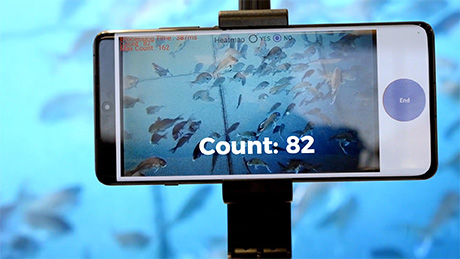
Fish being counted
Related Contents
